
Welcome to Kickerupdate – about fifa world cup
Introduction
The FIFA World Cup is the biggest and most prestigious football tournament in the world. Organized by the governing body of world football, FIFA, the tournament brings together the best national teams from across the globe to compete for the ultimate prize in football.
Since its inception in 1930, the FIFA World Cup has become more than just a sporting event. It is a global celebration that unites billions of fans, showcases incredible talent, creates unforgettable moments, and inspires future generations of footballers. Every edition of the tournament delivers drama, excitement, and history-making performances that remain etched in football folklore.
In this comprehensive guide, we will explore the history, hosting process, tournament format, records, legendary players, economic impact, and future of the FIFA World Cup.
What is the FIFA World Cup?
The FIFA World Cup is an international football championship contested by the senior men’s national teams of FIFA member nations. The tournament is held every four years and is considered the pinnacle of international football.
Winning the FIFA World Cup is regarded as the highest achievement in football. National teams spend years preparing and competing in qualification campaigns to earn a place in the tournament.
The competition attracts billions of viewers worldwide and generates enormous economic, cultural, and social impact wherever it is hosted.
History of the FIFA World Cup
The Beginning (1930)
The first FIFA World Cup took place in 1930 in Uruguay. Only 13 teams participated in the inaugural tournament.
Uruguay hosted and won the competition by defeating Argentina 4-2 in the final. This historic victory established Uruguay as one of football’s early powerhouses.
World War Interruptions
The tournament was suspended during:
- 1942 (World War II)
- 1946 (World War II aftermath)
After the war, the FIFA World Cup returned in 1950, hosted by Brazil.
Growth of the Tournament
Over the decades, the FIFA World Cup evolved from a small international event into the world’s largest sporting spectacle.
Key milestones include:
| Year | Development |
|---|---|
| 1930 | First tournament held |
| 1950 | Return after WWII |
| 1982 | Expanded to 24 teams |
| 1998 | Expanded to 32 teams |
| 2026 | Expanded to 48 teams |
The expansion reflects football’s growing popularity across every continent.
FIFA and Its Role
FIFA (Fédération Internationale de Football Association) was founded in 1904 and serves as the governing body of world football.
Responsibilities include:
- Organizing the FIFA World Cup
- Managing international football regulations
- Developing football globally
- Supporting member associations
- Promoting fair play and inclusivity
Today, FIFA consists of more than 200 member associations, making it one of the largest sporting organizations in the world.
How Countries Qualify for the FIFA World Cup
Qualifying for the FIFA World Cup is an enormous challenge.
Teams compete in continental qualification tournaments organized by:
- UEFA (Europe)
- CONMEBOL
- CAF
- AFC
- CONCACAF
- OFC
Thousands of matches are played during qualification campaigns, making participation in the tournament a major achievement.
How Hosts Are Selected
Hosting the FIFA World Cup is one of the most sought-after opportunities in sports.
Countries submit bids to FIFA and are evaluated based on:
Stadium Infrastructure
Hosts must provide world-class stadiums capable of accommodating large crowds.
Transportation
Efficient airports, rail networks, and roads are crucial.
Accommodation
Hotels and hospitality services must be able to support millions of visitors.
Security
Comprehensive safety measures are required.
Financial Capability
Hosts must demonstrate the ability to fund tournament operations and infrastructure.
Famous FIFA World Cup Hosts
Brazil
Brazil has hosted multiple editions and is synonymous with football culture.
Germany
Known for exceptional organization and passionate fan support.
South Africa
Hosted the first FIFA World Cup on African soil in 2010.
Russia
Successfully hosted the tournament in 2018.
Qatar
Hosted the 2022 edition, becoming the first Middle Eastern nation to stage the event.
United States, Canada, and Mexico
The 2026 FIFA World Cup marks the first tournament jointly hosted by three countries.
FIFA World Cup Tournament Format
Group Stage
Teams are divided into groups.
Each team plays every other team in its group.
Points System:
- Win = 3 Points
- Draw = 1 Point
- Loss = 0 Points
Top teams advance to the knockout rounds.
Knockout Stage
The knockout phase includes:
- Round of 16
- Quarterfinals
- Semifinals
- Final
A single defeat can eliminate a team, making every match crucial.
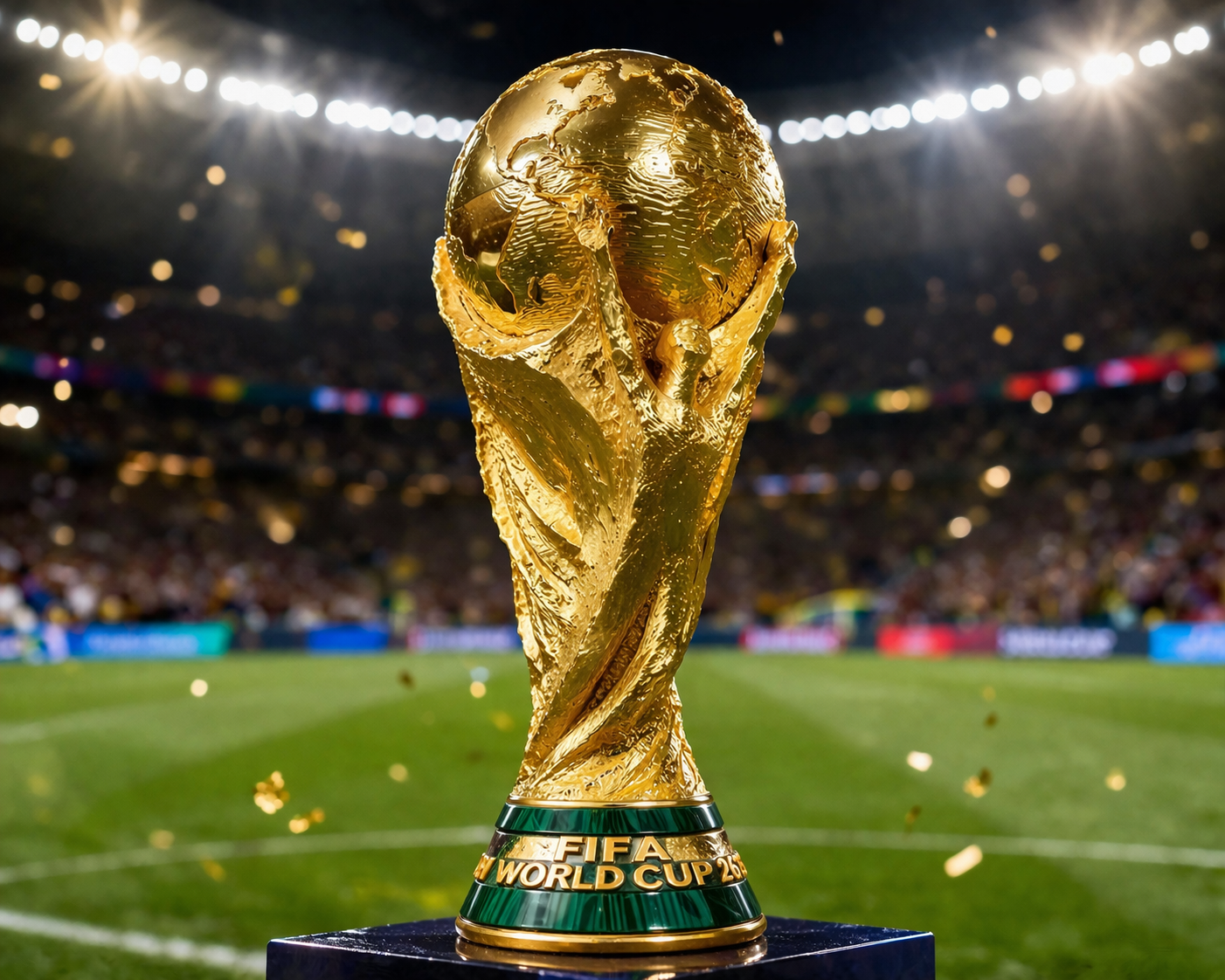
FIFA World Cup Trophy
The iconic trophy is among the most recognizable symbols in sports.
Introduced in 1974, the trophy features two human figures holding the Earth.
Key Facts:
- Made primarily of gold
- Height: 36.8 cm
- Weight: Approximately 6.1 kg
Every footballer dreams of lifting the FIFA World Cup trophy.
Most Successful Teams in FIFA World Cup History
Brazil – 5 Titles
Brazil remains the most successful nation in FIFA World Cup history.
Titles:
- 1958
- 1962
- 1970
- 1994
- 2002
Germany – 4 Titles
Germany has consistently been among the strongest teams in world football.
Italy – 4 Titles
Italy’s defensive excellence has earned multiple championships.
Argentina – 3 Titles
Argentina’s football heritage includes numerous legendary players.
France – 2 Titles
France has emerged as a modern football powerhouse.
Greatest FIFA World Cup Players
Pelé
Often regarded as one of the greatest footballers ever.
Achievements:
- Three World Cup titles
- Over 1,000 career goals
Diego Maradona
Led Argentina to glory in 1986 and produced some of the most iconic moments in football history.
Zinedine Zidane
Instrumental in France’s triumph in 1998.
Lionel Messi
Crowned his remarkable career by winning the 2022 World Cup.
Cristiano Ronaldo
One of football’s greatest goalscorers and international stars.
Memorable FIFA World Cup Moments
Maradona’s “Hand of God” (1986)
One of the most controversial moments in football history.
Brazil’s 1970 Team
Widely considered one of the greatest teams ever assembled.
Germany 7-1 Brazil (2014)
A shocking semifinal result that stunned the football world.
Messi’s Triumph (2022)
Argentina’s victory provided one of the most emotional endings in tournament history.
FIFA World Cup Records
Most Titles
Brazil – 5
Most Appearances
Several football legends have participated in multiple tournaments.
Most Goals in Tournament History
Miroslav Klose holds the all-time scoring record with 16 World Cup goals.
Youngest World Cup Winner
Pelé won the tournament at age 17.
Economic Impact of the FIFA World Cup
Hosting the FIFA World Cup can significantly boost a country’s economy.
Benefits include:
Tourism Growth
Millions of international visitors travel to host countries.
Job Creation
Infrastructure projects create thousands of employment opportunities.
Global Exposure
Hosts gain worldwide visibility and branding opportunities.
Infrastructure Development
New stadiums, roads, airports, and transport systems often remain long after the tournament ends.
Cultural Impact of the FIFA World Cup
The FIFA World Cup transcends sport.
It:
- Unites cultures
- Promotes international friendship
- Inspires youth participation
- Celebrates diversity
- Encourages national pride
Fans from every corner of the world come together to celebrate football.
Technology in the FIFA World Cup
Modern tournaments utilize advanced technology.
VAR (Video Assistant Referee)
VAR helps officials review controversial decisions.
Goal-Line Technology
Confirms whether the ball has crossed the goal line.
Performance Analytics
Teams use data-driven insights for tactical planning and player development.
Technology has improved fairness and accuracy in the FIFA World Cup.
FIFA Women’s World Cup
The success of the men’s tournament has been mirrored by the growing popularity of the women’s game.
The FIFA Women’s World Cup showcases the world’s best female footballers and continues to attract record audiences globally.
FIFA World Cup 2026
The 2026 FIFA World Cup will be historic for several reasons:
First 48-Team Tournament
The competition will feature 48 teams instead of 32.
Three Host Nations
Hosted by:
- United States
- Canada
- Mexico
More Matches
The expanded format will provide more opportunities for emerging football nations.
The tournament is expected to break attendance and viewership records.
Why the FIFA World Cup Matters
The FIFA World Cup is not merely a football tournament; it is a global phenomenon that captures the imagination of billions.
It represents:
- Excellence
- Passion
- National pride
- Unity
- Competition
- Inspiration
For players, winning the FIFA World Cup is the pinnacle of achievement. For fans, it is a celebration of football’s power to bring people together.all news. Stay with us as we continue to bring you the best football news, deeper insights, and nonstop updates from the football world. Your support motivates us to improve and deliver even better football news every single day. your first post.
One response
Hi, this is a comment.
To get started with moderating, editing, and deleting comments, please visit the Comments screen in the dashboard.
Commenter avatars come from Gravatar.